
Have you ever sat in a quiet room, only to notice a constant ringing, buzzing, or humming in your ears sounds that no one else around you can hear? If so, you might be experiencing tinnitus. This condition is more common than you think, affecting millions of people worldwide.
Although tinnitus itself isn’t a disease, it’s usually a warning sign of another issue such as hearing loss, prolonged noise exposure, ear problems, or even stress. The good news? With the right knowledge and strategies, you can learn how to reduce its impact on your daily life.
What Is Tinnitus?
Tinnitus is the sensation of hearing sound without an actual external noise source. People often describe it as:
- Ringing in the ears
- Buzzing or humming
- Clicking, whistling, or whooshing
For some, it’s a mild background noise. For others, it can be disruptive and stressful. Research suggests that around 15–20% of adults experience tinnitus at some point in their lives, with symptoms becoming more common as we age.
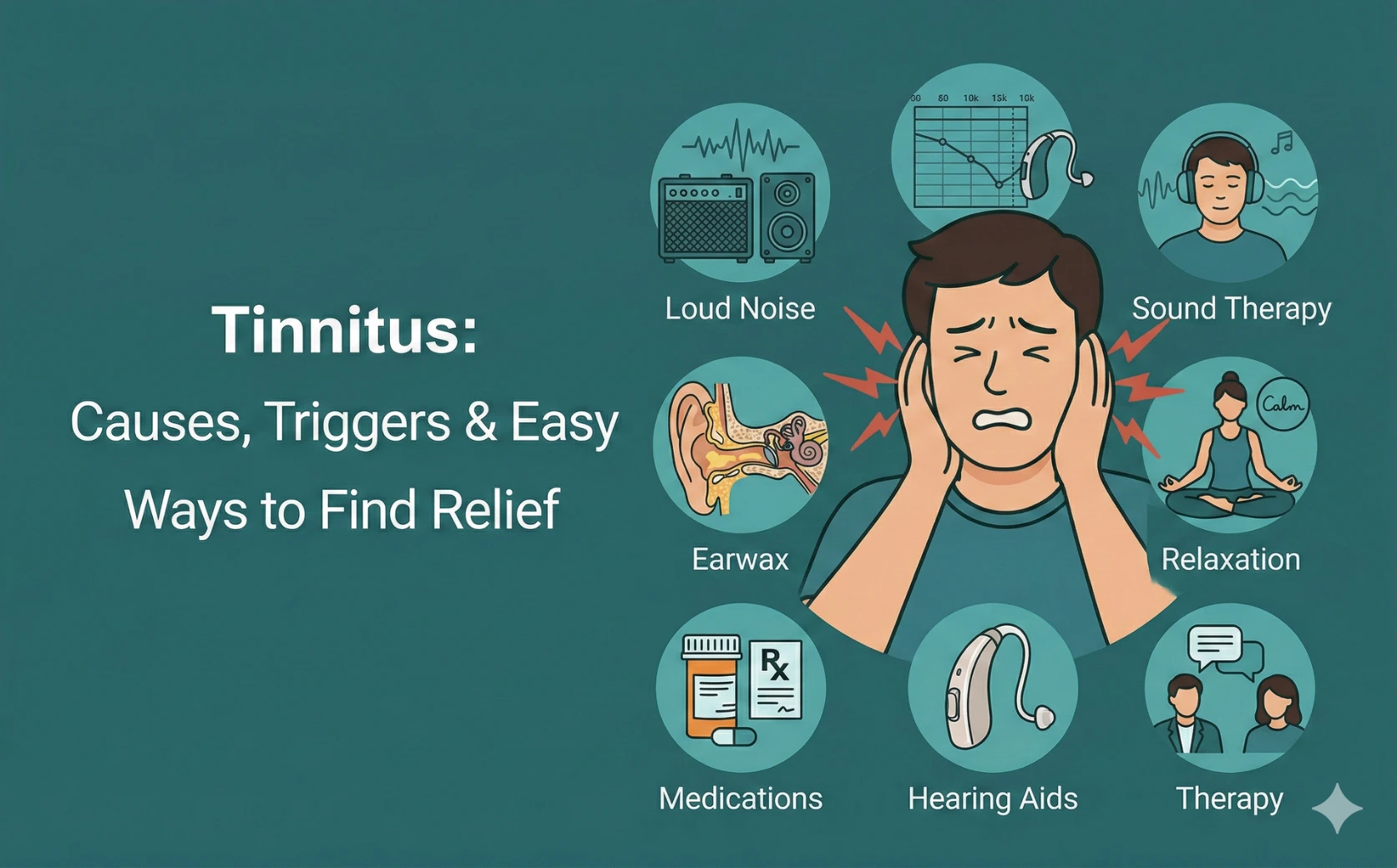
Why Does Tinnitus Suddenly Get Louder?
Tinnitus doesn’t always stay the same it can fluctuate. Some days you hardly notice it, and other times it feels overwhelming. Here are the most common reasons behind sudden flare-ups:
Loud Sounds and Noise Exposure
- Concerts, heavy machinery, or even turning up the headphones too loud can irritate your ears and make tinnitus worse. Protect your hearing with earplugs or noise-canceling headphones when you’re in loud environments.
Stress & Anxiety
- Your mind and body are closely connected. When you’re stressed, your brain becomes more aware of internal noises. This can make the ringing feel louder than it really is. Relaxation techniques like deep breathing, meditation, or light exercise can make a huge difference.
Certain Medications
- Some medicines such as high doses of aspirin, certain antibiotics, and specific antidepressants are linked to worsening tinnitus. If your symptoms started after beginning a new prescription, ask your doctor about alternatives.
Ear Infections or Wax Build-Up
- Something as simple as blocked ears can trigger or worsen tinnitus. A quick visit to a healthcare provider can often clear up the problem and reduce the noise.
Caffeine, Alcohol & Diet
- For some people, caffeine, alcohol, or salty foods can make tinnitus louder. Try keeping a symptom journal to see which foods or drinks affect you most.
Can Thinking About Tinnitus Make It Worse?
Yes, it can. The more attention you give to the ringing, the more noticeable it becomes. This is because your brain naturally tunes into sounds it thinks are important.
👉 Tip: Distract your mind with soft background music, podcasts, or a white noise machine. Keeping your focus elsewhere makes tinnitus less noticeable.
Can Tinnitus Affect Your Ability to Work?
For many people, tinnitus is more of an annoyance than a career obstacle. But for others—especially when paired with hearing loss it can make daily job responsibilities much harder. Tasks like joining team meetings, talking on the phone, or keeping up with conversations in a noisy office can quickly become overwhelming.
In severe cases, tinnitus may interfere with focus, productivity, and even sleep quality. When constant ringing or buzzing leads to stress, fatigue, or communication problems, it can significantly impact work performance.
Everyday Habits That May Trigger Tinnitus
Some lifestyle choices can make tinnitus symptoms spike:
- Listening to loud music without ear protection
- Spending long periods in total silence
- Drinking too much caffeine or alcohol
- Skipping sleep or staying up late
- Overexercising without rest
By identifying your personal triggers, you can better manage your tinnitus and avoid flare-ups.
Take Control of Your Tinnitus with Tinnitus Connect
If you’re struggling with ringing, buzzing, or hissing in your ears, you don’t have to manage it alone. Early support is the key to long-term relief.
At Tinnitus Connect, our specialists create personalized tinnitus care plans designed around your unique needs. From identifying triggers to teaching coping strategies, we’ll help you reduce the noise and regain peace of mind.
Book your free consultation today and start your journey toward calmer, quieter days.